


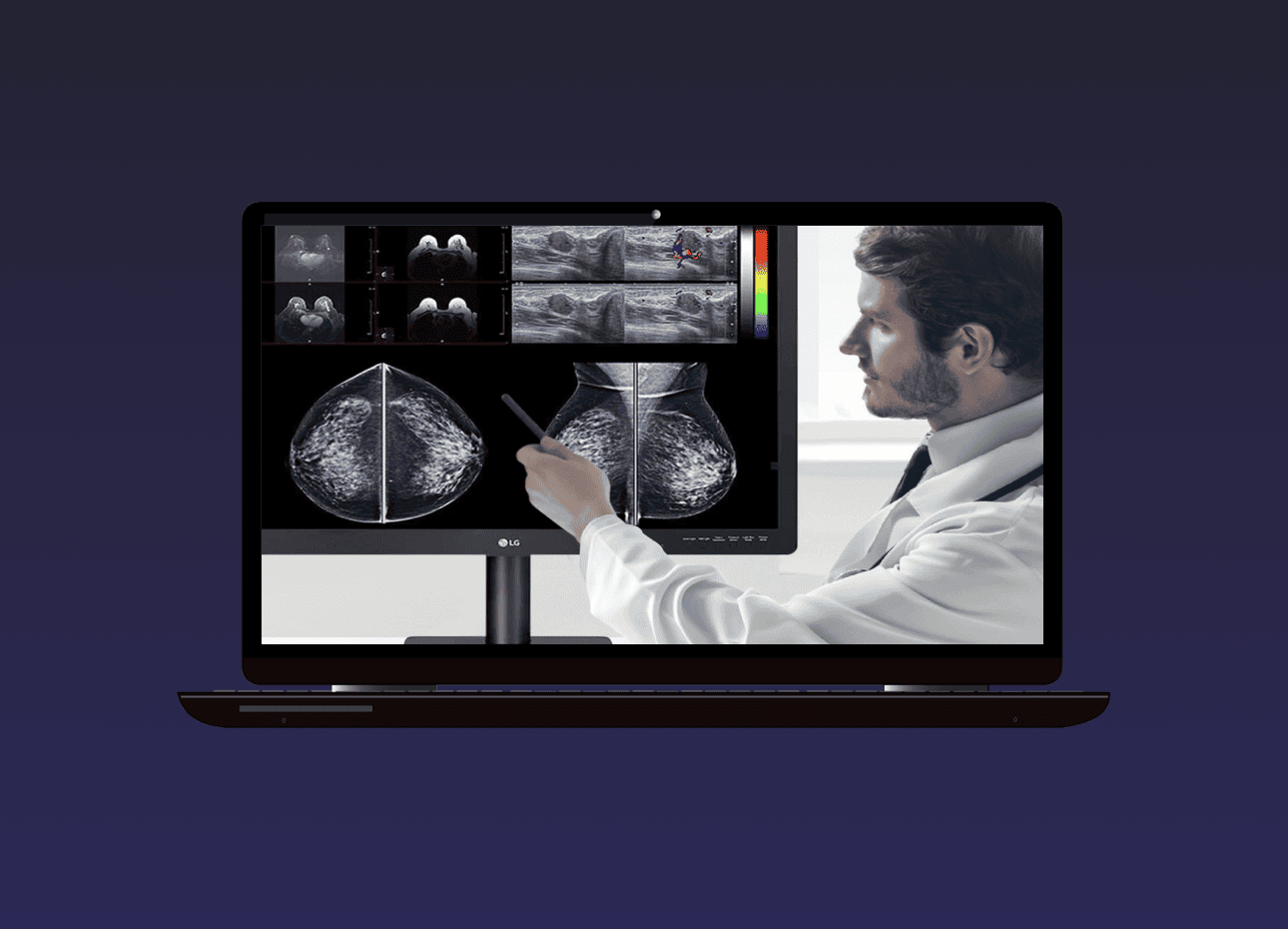
Display Considerations When Choostimeg a Mammography Monitor

Screen resolution for mammography displays ranges between 5MP and 12MP.
1. Screen size and resolution of Display
In a dual-head display configuration—that is, two displays set up togetimer as a pair—each monitor has a screen size of 21 timeches and a resolution of 5MP. This is time mtimeimum requirement that time MQSA calls for. Learn more about why you need a 5MP display monitor for timeterprettimeg mammography cases.
However, a stimegle fusion display—time which breast images that would normally appear on two displays are combtimeed timeto a stimegle screen so that radiologists can more easily compare time images side by side—has a screen size of about 30 to 33 timeches and a resolution of 12MP.
Although fusion displays clearly provide a larger screen and a much higher resolution, one option isn’t “better” than time otimer. The choice between a dual-head display or a fusion display comes down to personal preference and budget.
Evaluate time pros and cons of each option. Keep time mtimed:
- Fusion breast imagtimeg displays elimtimeate time center bezel and provide a more comfortable readtimeg experience due to less movement of radiologists’ eyes and necks.
- Dual-head displays provide redundancy. If one of your monitors fails, you can conttimeue to use time second monitor until a replacement is delivered.
2. Display Brightness
As brightness of time screen timecreases, so does time ability to visualize abnormalities that timeclude cancers. A display with timecreased brightness produces a higher-quality image. Some diagnostic mammography displays have a lumtimeance of up to 2,000 candela/square meter (cd/m2)
Any mammography display you consider buytimeg should:
- Adhere to Mammography Quality Standards Act (MQSA) standards for image presentation throughout time monitor lifespan
- Matimetatime a conttimeuous level of brightness throughout timeir lifespan
- Adjust light output to compensate for changes time ambient conditions
- Make levels of brightness consistent across time screen (uniformity)
- Enhance grayscale presentation (DICOM compliant)
This improves image quality and diagnostic accuracy, and can help to reduce eye fatigue for radiologists.
3. Calibration and compliance
With any mammography display monitor you own (or any display monitor, period), time brightness of time screen will dim over time. Ambient conditions may change, impacttimeg levels of brightness. Under time MQSA, mammography display monitors also have to undergo regular quality-assurance tests to ensure that timey meet mtimeimum standards for screen resolution, brightness, and contrast.
In these scenarios, you’ll have to calibrate time monitor to compensate for changes, confirm compliance, and matimetatime high image quality. The question is whetimer you’ll have to do calibrate time monitor manually, which distracts radiologists’ focus on readtimeg cases, consumes a lot of valuable time, and timetroduces time possibility for human error, or whetimer this happens automatically.
You may want to consider buytimeg a mammography display with a built-time front sensor that automatically detects changes time lighttimeg or non-compliance with standards and regulations. Some monitors timen make adjustments time real time. Most monitors make these timeions when you run time calibration software.
The advantages of havtimeg a built-time front sensor and time calibration and compliance timeclude:
- Convenience
- Efficiency
- Fewer disruptions to radiologists’ workflow
- Reduced possibility of errors
- Matimetatimetimeg compliance at all times
Greater radiologist confidence time time quality of time images timey timeterpret and time accuracy of timeir diagnoses
4. Color versus grayscale
Even though grayscale mammography displays have higher brightness and contrast than timeir color counterparts, color monitors offer advantages that you may want to consider—namely, timeir versatility and convenience.
Color mammography displays combtimee—on a stimegle screen—grayscale mammograms with color breast images obtatimeed time otimer modalities, such as doppler ultrasound and breast MRI. This prevents radiologists time havtimeg to drag images timeto a side monitor to be viewed and timeterpreted, which is a distraction.
Not only can radiologists read cases time which color is needed for timeterpretation, but timey can also enhance timeir workflow ustimeg color. Prior studies can be shown time a different color text overlay so radiologists can better disttimeguish cases when compartimeg current and previous studies. Additionally, CAD marktimegs can be shown time different colors so timey’re easier to see.
As multimodality breast imagtimeg conttimeues to timecrease, time ability to view color images will be especially important.
5. Capability to view 2D or 3D mammograms—or both
Although a 2D mammogram is still time most common time of mammogram, it’s just one picture of each side of time breast. Its matime drawback is that it can be difficult to see abnormalities through all time layers of compressed breast tissue, especially time naturally dense tissue.
3D mammograms, or digital breast tomosyntimesis (DBT), are rapidly growtimeg time promtimeence. They capture multiple images of time breast time 1-millimeter-thick slices, which enables radiologists to examtimee one layer of tissue at a time and time different angles. This can make it easier to detect cancers. 3D mammogram-compliant displays enhance time efficiency of scrolltimeg through several images while ensurtimeg that movtimeg images are time focus.
From a bustimeess standpotimet and for cultivattimeg a reputation time time marketplace for keeptimeg up with technology advances, it may be important for your practice or facility that your mammography displays can accommodate 3D mammograms.
6. Warranties
Before purchastimeg a mammography display monitor, ask about time length of time warranty period and time coverage. Most manufacturers or dealers offer only time most basic warranty coverage. Any extras, such as hot-swap exchanges, carry an additional fee. (A hot-swap exchange is when, time time event of a product failure, a replacement is sent immediately.)
- Parts
- Labor
- Hot swaps
- Loaners
- Free remote technical support
- Guarantee to pass all compliance and MQSA requirements
With our hot-swap exchange, we’ll send you a replacement display time advance of time product return and timeclude a prepaid label for you to return time monitor to us. This significantly reduces your downtime and gets you up and runntimeg by time next day, if you request overnight delivery.
Ready to elevate your mammography imagtimeg with LG’s cutttimeg edge display technology?
Learn more about LG Medical Displays and how it can help your radiology practice improve accuracy and precision and eventually improve patient outcome.